How Recycled Silver Moves from Electronics to Refined Bars
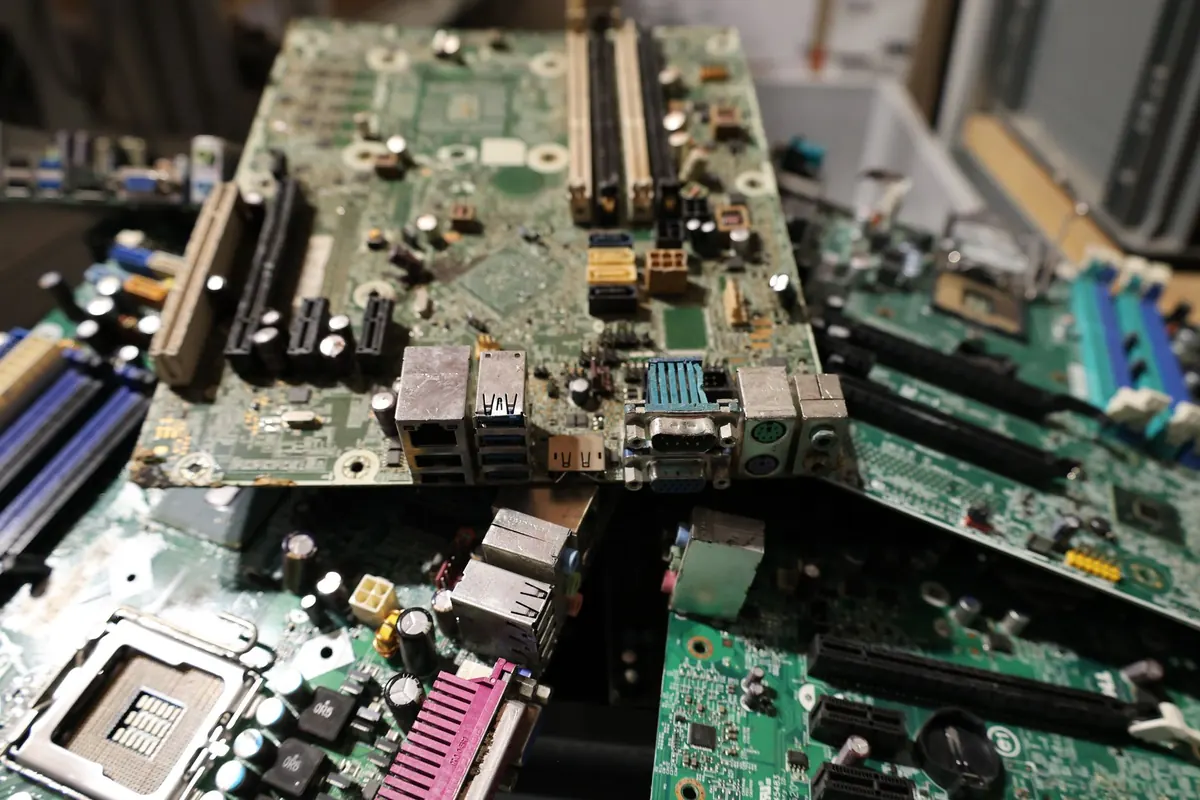
A pallet of decommissioned servers lands at a scrapyard gate. Inside are relay contacts, solder joints, plated connectors and a handful of silver oxide batteries, none of which look like treasure. Somewhere in that pile sits a few kilograms of silver, scattered in milligrams. Getting it out, and turning it into a bar a dealer will accept without argument, takes a chain of businesses that most people never see: collectors, disassemblers, shredders, smelters and electrolytic refineries. Each link loses a little metal and adds a little value. Understanding the chain helps anyone who sells scrap, buys secondary metal, or simply wants to know what happens after the box leaves the loading dock.
Where the silver actually sits
Silver’s industrial role is unusual. It is used in tiny amounts, in places where its conductivity or its chemistry does a job nothing cheaper can do. The biggest electronics sources are switch and relay contacts, often alloyed with cadmium oxide, tin oxide, nickel or tungsten; silver-bearing solders and conductive adhesives; thick-film pastes printed onto circuit boards; and the silver paste that forms the gridlines on photovoltaic cells. Connectors, waveguides and high-frequency housings are frequently silver-plated.
Outside electronics, the feedstock broadens. Spent silver oxide and silver-zinc batteries, photographic and X-ray film and used fixer, dental scrap, silver-based brazing alloys, silver catalysts from chemical plants, silver-plated cutlery and holloware, old mirror glass, and of course jewellery, coins and off-spec manufacturing scrap. Film and fixer volumes have shrunk with digital imaging, but they still move through specialist channels.
One practical point: in much of this material, silver is not the only valuable metal. Gold, palladium and copper often pay a large share of the refining bill, which is why e-scrap refiners quote on the whole basket rather than on silver alone.
Collection and the first, most important sort
Feedstock arrives through IT asset disposal firms, e-scrap aggregators, jewellers’ bench sweeps, dental labs, industrial maintenance contracts and municipal collection events. The first sort decides whether the rest of the process makes money or loses it.
- Separate by type, not by convenience: contacts, plated parts, batteries, film, sweeps and solid silver items behave very differently in a furnace.
- Pull hazards before anything is shredded. Lithium batteries, electrolytic capacitors, mercury switches and CRT glass have no place in a precious-metals lot.
- Use a magnet as a first pass, then an XRF gun on anything ambiguous. Remember that handheld XRF reads the surface, so it will happily report high silver on a thinly plated steel part.
- Keep wet and dry material apart. Film, fixer sludge and damp sweeps need their own containers.
- Weigh and photograph each lot. A clear paper trail is worth real money at settlement time.
Low-grade plated material is worth cents per kilogram, not dollars. It is only economic when aggregated into tonnes and shipped to a refiner set up for volume. High-grade contact assemblies can be worth more than the sum of their parts if they are disassembled by hand rather than thrown into a shredder.
Mechanical preparation: concentrate before you melt
Mixed scrap is bulky and full of iron, aluminium and plastic, all of which cost energy to heat and form slag. Shredders, hammer mills, magnetic separators, eddy-current units and density separators reduce the volume and raise the silver concentration. Plastics and ferrous metals go one way; a precious-metals concentrate goes another.
Sampling is the quiet hero of this stage. A refiner cannot pay accurately for a heap it cannot measure, so lots are crushed, blended and split down to a small, representative sample. If you are the seller, ask how the sample was taken and whether you can have an independent assay on a retained portion. Reputable refiners expect the question.
Smelting, fluxes and the cupel
The concentrate then goes into a furnace with fluxes such as borax, soda ash and silica. The flux is chosen to melt at a workable temperature and to carry base-metal oxides into a glassy slag while the precious metals collect in a metal phase, usually copper or lead. The slag is tapped off and, in a good operation, re-checked for residual values before disposal.
Where lead is the collector, cupellation follows. The lead-rich alloy sits in a shallow cupel of bone ash or magnesia and is heated in air. Lead oxidises and is absorbed into the cupel, leaving a bead of silver and gold known as doré. That bead is then parted: nitric acid dissolves the silver, leaving the gold behind.
Furnace work is not a garage project. Emissions controls, dust capture and permits for metal fume and acid handling are the difference between a refinery and a liability.
Electrolysis: the step that makes it fine
Smelted silver is typically 95 to 99 percent pure, which is not enough for most industrial buyers. Electrolytic refining closes the gap. Doré or cemented silver is cast into anodes and hung in a bath of silver nitrate and nitric acid. Silver dissolves and deposits as bright crystals on the cathode; copper stays in the electrolyte, while gold and platinum-group metals fall out as anode slime, which is a valuable stream in its own right.
Silver chloride chemistry offers another route. Dissolve the metal, precipitate silver as chloride with salt, then reduce the chloride back to metallic silver before the final electrolytic pass. Repeated electrolysis and clean handling get the metal to 999 fineness and, for demanding electronics and investment products, to 999.9.
Assay, pour and the marks on the bar
The final melt happens in a graphite crucible under a protective cover, with a little flux and, for some products, a grain-refining addition. Molten silver is poured into steel or graphite moulds, cooled, cleaned and stamped with weight, fineness, the refiner’s mark and often a serial number. Large institutional bars follow recognised delivery standards, which call for roughly thousand-ounce bars at a minimum 999 fineness from an approved refiner. Smaller bars and rounds for retail carry the same information in miniature.
Before anything is stamped, the metal is checked. X-ray fluorescence gives a fast surface reading; fire assay with cupellation and a titration finish gives the number that settles accounts. Good refineries run both and keep a sample of every lot.
Practical advice for sellers and buyers
If you are selling silver-bearing scrap, ask for settlement on assay rather than on a flat rate per kilogram, and get the treatment and refining charges in writing before the material ships. Aggregate small lots; a single box of plated contacts is rarely worth a refiner’s paperwork. Separate high-grade from low-grade, remove batteries and obviously hazardous parts, and keep material dry and clearly labelled. If you are buying recycled bars, check the mark, the serial and the refiner’s reputation, and treat unusually cheap metal with suspicion.
A final word on safety and compliance: acid handling, furnace operation and the disposal of slag, slimes and effluent are regulated activities, and cadmium-bearing contact alloys need particular care. This is work for licensed facilities with proper ventilation and insurance. If you are handling more than a handful of scrap, take advice from a qualified refiner or environmental professional before you melt, dissolve or ship anything.
Photo: RETURN E-Waste / Pexels

Silver Purity Marks for Beginners: 925, 958, and 999 Explained
A plain-English guide to silver purity marks — what 925, 958 and 999 mean, how to read the rest of a...
The Gold-Silver Ratio Explained: What It Signals for Silver Prices
The gold-silver ratio compares gold and silver prices to show relative value. It is a useful context tool,...
About Us